

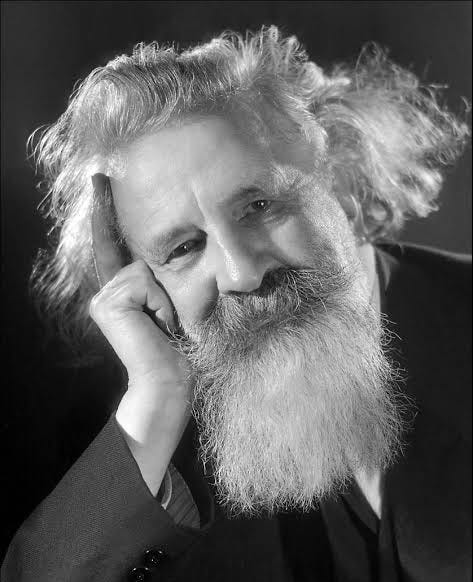
French philosopher Gaston Bachelard, author of works such as The Poetics of Space, is remembered for his articulation of the idea that “scientific investigation is polemical.” Bachelard cautioned that science must stay vigilant not to impede “scientific imagination” by succumbing to “the seduction of the empirical.”
The notion of a scientific consensus on any subject would likely be anathema to Bachelard. He saw science as social and dialogic, an ongoing exercise in robust dialogue and debate.
Today, in a time of rancorous hyper-partisanship fueled by an atmosphere of perpetual crisis, fear and absolutism, poor Bachelard would almost certainly be castigated as a denier. Few people would understand that his use of the word “polemical” was, in fact, a quiet celebration of civility.
We can learn from Bachelard’s example. Civility is not passivity. Science is never “settled” even when it becomes useful to utilitarian ends. Even more than science, viable civil society and socially just political-economic action require powerful democratic debate. But such debate cannot take hold in the face of apocalyptic absolutism, scientific or otherwise.
CIVIL IMAGINATION vs. POLITICAL CONSUMERISM
In the United States, citizen disillusionment is reflected in Congressional job approval ratings below 20%, as two thirds of Americans consistently express dissatisfaction with the direction of the country.
Voter registration is 78.6%, meaning that 21.4% of eligible voters do not bother to register. Decline to state voter registration is a record high 43% versus only 27% for each party. The non-participation rate among those who are registered to vote is over one third.
The stark reality of these statistics is that half the U.S. electorate has rejected the intellectual and spiritual bankruptcy of today’s pseudo-politics, creating a de facto crisis of legitimacy.
Open Secrets estimates that nearly $15 billion was spent in the 2024 federal election cycle. This orgy of spending on empty bombast and political spectacle stands in inverse proportion to the shriveling substance of daily civic life.
The devolution of solution-less US politics into permanent consumer spectacle creates partisan voters easily swayed by demagoguery and marketing blandishments rather than effective citizens engaged in their communities. It erodes civil life rather than strengthening it.
Political parties cannot do the work of building civil society. Only citizens can.
REIMAGINING POLITICS
Since 2017, Reimagining Politics has been charting the enormous variety of citizen-driven civil associations in Europe and the Americas that are making profound change, then facilitating connections among them.
One example of new civic models working outside of both parties and government is Vivero de Iniciativas Ciudadanas (VIC–Nursery of Citizens Initiatives) in Spain. VIC’s work doing social mapping of the non-monetary social economy, even in war torn Ukraine, points away from the corrosive partisan noise of consumer politics toward a mature, optimistic and future-oriented politics of community.


There are thousands of alternative civic models such as VIC that exemplify the transformative potential for creating democratic society outside of the monopolistic party-government nexus seen in the US and EU.
Further, Yale professor Hélène Landemore and her associates worldwide are doing pioneering work on various forms of direct democracy that empower “the rule of the many” in lieu of rule by a self-interested class of elected politicians. Their models offer potential connecting mechanisms to empower the native political creativity embodied in citizen-driven politics.

Potential solutions abound, but we need the courage to pursue a different path to counter today’s toxic absolutism, which ends in dangerous political entropy and permanent war at a time of unprecedented opportunity for creative problem solving.
Gaston Bachelard 🤍